Weather forecasting has always been a challenge of scale, requiring the modeling of atmospheric behavior from local neighborhoods to the entire planet.
The atmosphere is a chaotic, interconnected system spanning the entire planet, governed by physical laws that govern the temperature, pressure, flow, and moisture within a continuous thin fluid confined by gravity on a rotating sphere. For most of the twentieth century, the only way to make sense of it was to simulate those physical laws directly — to solve equations (at first simplified) describing fluid flow, thermodynamics, and atmospheric chemistry using the largest computers available.
That approach worked then and continues to be improved even today. But over the past several years, artificial intelligence (AI) has entered the picture — and it operates on entirely different logic. Where traditional forecasting systems solve the physics of the atmosphere from scratch on every model run, AI-based systems learn from the historical record of those simulations. Trained on decades of past atmospheric data, these systems learn to recognize which conditions tend to produce which outcomes and then apply those patterns to generate new predictions.
What that means in practice, how reliable it is, where the limitations are, and what role human meteorologists continue to play in all of it — those are the questions being asked. The short version is that AI is beginning to reshape how operational weather forecasting works, and the longer version is considerably more complicated.
A Brief History of Weather Prediction
To understand why AI matters in this context, you need to understand what came before it.
Long-range weather prediction as a computational problem dates to 1922, when British mathematician Lewis Fry Richardson published Weather Prediction by Numerical Process.1 Richardson's idea was straightforward in concept and staggering in practice: break the atmosphere into a three-dimensional grid, apply the equations governing fluid dynamics and thermodynamics to each grid point, and step the solution forward in time. He attempted to do this by hand for a six-hour forecast over Europe, using a small army of human "computers" working in parallel. The calculation took months and produced a wildly inaccurate result, partly due to initialization errors. But the framework he outlined was sound.
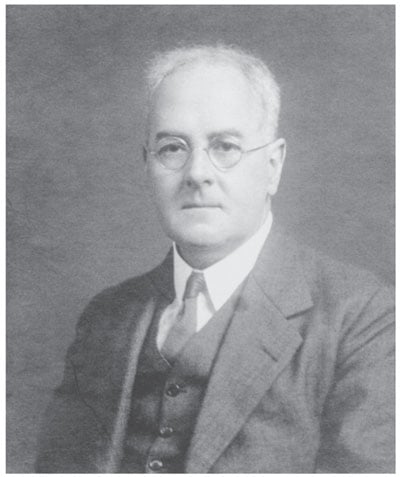
Lewis Fry Richardson
It took thirty years and the invention of electronic computing to prove it. In April 1950, meteorologist Jule Charney and colleagues at Princeton's Institute for Advanced Study ran the first successful numerical weather prediction (NWP) on the ENIAC — one of the earliest programmable electronic computers.2 The results, while coarse and using vastly simplified (barotropic) equations, demonstrated that the atmosphere could be forecast computationally. From that point forward, NWP became the organizing paradigm of modern meteorology.
Over the following decades, operational forecast models improved steadily. Weather services began running NWP systems on dedicated supercomputers. Satellite observations, radiosondes, and buoy networks fed observational data into increasingly sophisticated data assimilation systems. The European Centre for Medium-Range Weather Forecasts (ECMWF), founded in 1975, developed what eventually became the world's most accurate global forecast system—the Integrated Forecasting System (IFS)—capable of producing reliable ten-day forecasts at a horizontal resolution of roughly 9 kilometers.
By the 2010s, a five-day forecast was about as accurate as a one-day forecast had been fifty years earlier. The technology worked, and exceptionally well at that. The question was whether this was the only way.
What is AI Weather Forecasting?
AI weather forecasting refers to the use of machine learning — primarily deep neural networks — to produce atmospheric predictions directly from data, rather than from physics-based simulations.
A traditional NWP model starts with a set of physical equations: the primitive equations of atmospheric motion, derived from Newtonian dynamics, thermodynamics, and mass conservation. These equations describe how wind, temperature, pressure, and moisture evolve over time. The model numerically integrates those equations forward, using observations of the current atmospheric state as initial conditions.
In most current implementations, AI models bypass explicit physical simulation entirely. Instead, they are trained on historical records of atmospheric states — specifically, reanalysis datasets — themselves produced by primitive equation models that reconstruct the global atmosphere at regular intervals over decades. Given the state of the atmosphere at one moment, the model learns to predict its state at a future moment. The model does not account for physical causality. Instead, it has been optimized to identify statistical associations within the retrospective primitive-equation-modeled datasets.
The most widely used training dataset is ECMWF's ERA5 reanalysis, which provides a detailed reconstruction of global atmospheric conditions from 1940 to the present at hourly intervals.3 Most leading AI weather models — including those from Google DeepMind, Huawei, and ECMWF — were trained primarily on ERA5 data.
The Models That Changed the Conversation
Several specific AI weather models have driven the current wave of interest in the field.
Pangu-Weather, developed by Huawei and published in Nature in 2023, was the first AI model to demonstrate performance competitive with ECMWF's operational HRES system across medium-range global-scale forecasting benchmarks. It uses a 3D Earth System Transformer architecture and produces global five-day forecasts in seconds.4
GraphCast, developed by Google DeepMind and published in Science in November 2023, uses Graph Neural Networks trained on 39 years of ERA5 data (1979–2017) at 0.25-degree horizontal resolution across 37 pressure levels. On its primary verification benchmark — 1,380 targets spanning wind speed, temperature, geopotential height, and other variables — GraphCast outperformed ECMWF's deterministic HRES system on 90% of targets. It produces a ten-day global forecast in under one minute.5
AIFS (Artificial Intelligence Forecasting System), developed by ECMWF and introduced in 2024, became the first fully AI-based system to enter operational service at a major international forecast center on February 25, 2025.6 An ensemble version — AIFS ENS, consisting of 51 members — followed on July 1, 2025.7 ECMWF has documented that AIFS runs with approximately 1,000 times less energy than the physics-based IFS while achieving competitive — and in some measures superior — forecast accuracy, with tropical cyclone track forecasts improved by up to 20% compared to the physics-based ensemble.6 The ensemble version currently operates at approximately 31-kilometer resolution, compared to nine kilometers for the physics-based IFS ensemble — a gap that matters for high-resolution applications.7
These systems are no longer only research demonstrations; they are beginning to influence operational forecast workflows.
How Do AI Weather Models Work?
The underlying statistical approaches vary, but most current AI weather models share a common structure. The model takes as input a representation of the global atmospheric state at a given moment — temperature, wind speed and direction, humidity, surface pressure, and other variables distributed across a three-dimensional grid. This initial state is typically derived either from NWP analysis or from reanalysis data. The model then produces a prediction of the atmospheric state some hours later, typically six or twelve hours. To produce forecasts beyond that lead time, the output is fed back in as the next input — a process called autoregression.
GraphCast and similar GNN-based models represent the global atmosphere as a graph structure, with nodes at geographic grid points and edges connecting nearby locations. Information propagates across the graph through multiple processing steps, enabling the model to capture large-scale atmospheric dynamics and regional patterns. This architecture is particularly well-suited to spatially structured data because it can efficiently represent connections across different scales simultaneously.
ECMWF's AIFS uses a different architecture — a transformer-based design with an encoder-processor-decoder structure — trained on ERA5 reanalysis data and then fine-tuned on ECMWF operational analysis fields. The ensemble version introduces small, deliberate variations to the initial atmospheric state to generate a range of possible forecast outcomes — essentially asking what if the starting conditions were slightly different? — and uses the spread of those results to express forecast uncertainty.
Most leading AI weather models were trained on reanalysis datasets that are themselves products of physics-based data assimilation systems — meaning AI forecasting, in most cases, sits downstream of traditional NWP rather than independent of it. This is worth keeping in mind when evaluating claims that AI will replace conventional modeling entirely.
AI vs. Traditional Numerical Weather Prediction
The comparison between AI models and NWP systems is frequently oversimplified in public coverage, and it's worth understanding why. The benchmarks that AI models perform well on are real, but they are not the same as operational forecast performance across the full range of conditions forecasters face. The actual picture is more nuanced than most headlines suggest.
On standard medium-range benchmarks — forecasts from one to ten days at the global scale — leading AI models now match or exceed NWP performance on many verification metrics. For a field that spent decades incrementally improving physics-based modeling, that is no small feat. For deterministic, globally averaged skill scores, systems like GraphCast and AIFS perform at or above the level of ECMWF HRES, which has historically been the most accurate operational forecast system in the world — and it, too, continues to improve as better science and higher native model resolution are invested in solving the primitive equations.
Computational efficiency gap: Running a global NWP model operationally requires the kind of supercomputing infrastructure that only national meteorological services and major research institutions have historically been able to sustain. Running AI forecast inference can be far less computationally expensive than operational NWP — a meaningful shift in accessibility for organizations consuming forecast output. That said, training these models from scratch still requires substantial compute resources, and the efficiency advantage applies primarily to the forecast generation step, not the full development pipeline.
Resolution and local detail: Current AI models primarily operate at global scales. ECMWF's IFS runs operationally at approximately nine-kilometer resolution for ensemble members; AIFS ENS currently operates at approximately 31 kilometers.7 For applications requiring high-resolution local forecasting — a severe thunderstorm warning, a coastal flood watch — the resolution of current AI systems is frequently insufficient. It's worth noting that even nine-kilometer resolution is known to be insufficient to fully resolve deep and shallow convection — the atmospheric processes most critical to severe storm forecasting.
Initialization dependency: Most AI models are initialized from NWP analysis or reanalysis fields. They cannot currently generate their own initialization from raw observations, though research into observation-driven systems is progressing. For now, AI forecasting sits downstream of traditional data assimilation.
Transparency: AI weather models offer far less interpretability than their physics-based counterparts. When one produces a forecast, there is no chain of physical reasoning for a forecaster to examine — no jet stream representation to evaluate, no surface cyclone structure to interrogate. When something goes wrong, determining why is often not possible, which makes learning from errors difficult and building confidence in the guidance harder. A physics-based model behaving unusually tends to do so in ways a trained meteorologist can recognize. With an AI model, that same visibility simply isn't there. The field does not yet have clean answers to this, and forecasters working on high-impact events are the ones who encounter this quandary most directly.
Extreme events: The performance gap is most significant here — and the stakes of getting it wrong are highest.
The core problem is what researchers call out-of-distribution generalization. AI weather models learn from data produced by historical NWP simulations. They become experts on the atmosphere as it has behaved over the period covered by their training data. But the most dangerous weather events are those that fall at or beyond the edge of historical experience. A Category 5 hurricane making a rarely-traveled track, a compound heat wave with no regional precedent, a rainfall event that shatters century-old records — these are precisely the events AI models are worst equipped to handle. When a scenario has no close analog in the training data, the model has no reliable mechanism for extrapolating into it.
A 2025 study published in Proceedings of the National Academy of Sciences by researchers at the University of Chicago and New York University examined this directly. The team trained an AI weather model by deliberately removing Category 3–5 tropical cyclones from its training data, then tested the model on Category 5 storms. The model failed to accurately forecast the unseen events. The researchers characterized this class of events as "gray swans" — physically possible but so rare that they are absent from training datasets — and concluded that false negatives in this category create serious societal risk.8
This outcome reflects what researchers describe as an extrapolation ceiling. AI models can interpolate skillfully within the range of conditions in their training data, but have no reliable way of reasoning beyond it. A physics-based model can, in principle, simulate atmospheric behavior it has never encountered before by applying fundamental equations. AI models have learned patterns — not processes. The climate change dimension compounds this problem as global temperatures rise, and extreme events become more frequent and more intense, widening the gap between the historical training distribution and the atmosphere we are actually forecasting.
There is an important nuance within the extreme events category, however. AI models have shown genuine skill in forecasting tropical cyclone tracks, which are primarily governed by large-scale background winds — conditions that are relatively well represented in historical training data. Intensity forecasting, particularly for rapid intensification events, is very different. The atmospheric processes driving rapid intensification — small-scale convective dynamics, ocean-atmosphere interaction, vortex structure — are both harder to observe and rarer in the historical record. AI models have repeatedly underestimated peak intensities in research assessments — a recognized issue partly due to data imbalance: infrequent events provide fewer training samples than common ones.
None of this means AI can't contribute to extreme event forecasting. The same research found encouraging evidence that models could sometimes draw on experience from strong events in one region to anticipate similar events in another — even when the specific scenario had no direct training equivalent.9 It's a promising early signal, but only a partial one. The field has not yet demonstrated consistent operational reliability for this event type.
Where AI Still Falls Short
No serious researcher in this field claims that AI has solved the challenge of weather forecasting. The limitations discussed in the previous section around extreme events are the most consequential, but they are not the only ones worth understanding.
Precipitation forecasting remains particularly challenging for AI systems. Precipitation involves highly localized, nonlinear processes — convection, orographic uplift, boundary layer interactions — that are difficult to capture at the resolutions at which current AI models operate. ECMWF released an updated version of AIFS on August 27, 2025, specifically to address precipitation forecasting deficiencies identified after the initial operational deployment9 — a useful reminder that even the best-resourced AI forecasting efforts encounter problems that only become visible once the system is running in the real world.
It's worth drawing a distinction that often gets lost in coverage of this topic. The precipitation forecasting problem described above is an atmospheric one — predicting how much rain will fall, where, and when. But what that water does once it reaches the surface is a separate problem entirely. What hydrologists call "land-surface hydrology" — how rainfall moves through soil, vegetation, terrain, and infrastructure like dams and drainage systems — is governed by its own set of physical processes and requires its own modeling discipline. Physics-informed AI applied to this domain, trained on outputs from physics-based hydrological models rather than historical weather patterns, is showing genuine promise for high-resolution flood-impact modeling at speeds previously unattainable.
A related limitation is spatial smoothing — a systematic artifact of how AI weather models are trained. Because these models are optimized to minimize average error across large datasets, they tend to produce outputs that favor smooth, averaged representations of atmospheric features over sharp, high-amplitude ones. This means AI models frequently underestimate peak intensities and blur the fine-scale structure of convective events — the kind of detail that matters most for severe thunderstorm warnings, localized heavy rainfall, and mesoscale forecasting generally. A model that predicts a broad area of moderate rainfall may score reasonably well on a global verification metric while missing the concentrated convective core that causes a flash flood. For broadcast meteorologists, emergency managers, and anyone whose decisions depend on knowing not just whether a storm will occur but how intense and how localized it will be, this remains a meaningful gap.
Subseasonal-to-seasonal (S2S) forecasting — predictions in the two-week to three-month range — is an active research frontier. ECMWF's AI Weather Quest, which ran competitive evaluations of ML models at three- and four-week lead times through late 2025 and into early 2026, found that several models showed meaningful skill above climatology — early evidence that the subseasonal range may be more tractable than previously thought — though consistent operational reliability there remains an unsolved problem for any modeling approach.
Local forecasting is another gap, but perhaps the most important one. Translating global AI model output into high-resolution, location-specific predictions that account for terrain, land cover, and other surface features remains largely the domain of post-processing techniques developed in conjunction with NWP systems.
None of this means the limitations are permanent. The field is moving rapidly. But accuracy claims for AI weather forecasting should always be read with attention to the specific forecast type, lead time, resolution, and conditions.
The Rise of Hybrid Models: AI and Physics Together
The most technically sophisticated development in operational weather prediction right now is not pure AI. It's the integration of AI and physics-based modeling into hybrid systems that leverage the strengths of both.
ECMWF's roadmap explicitly targets what it calls "ML-augmented IFS" — the embedding of neural network components within the physics-based IFS framework to improve the representation of clouds, convection, and turbulence. Rather than replacing the model's core physics engine with machine learning, the approach uses AI to improve the surrounding components — particularly the parts where simplified physics equations have always been the weakest approximation of atmospheric behavior.
NOAA moved in the same direction, deploying three operational AI-driven models in December 2025. The most telling result came from the third — a hybrid grand ensemble that combined its traditional physics-based system with a new AI-based one. It consistently outperformed either system running alone, reinforcing the case that the most productive near-term path is neither pure AI nor pure physics, but the two working together.
This convergence is increasingly seen as the near-term future of the field. Physics-based models provide the interpretability, the physical consistency constraints, and the ability to represent processes with no historical precedent. AI components provide speed, efficiency, and the ability to capture complex, high-dimensional patterns in historical data that explicit physics representations miss. The question is no longer which approach is better but how we can combine them most effectively.
How are Industries Using AI Weather Forecasting Today?
The implications of faster, cheaper, and more accessible weather prediction extend well beyond meteorology departments. What changes in the research lab eventually change in the control room, the newsroom, the operations center, and the emergency command post. Across sectors, organizations are working through what AI-enhanced weather data means for their operations.
Broadcast meteorology: Television weather is often the public's most direct point of contact with professional meteorology, and it's one of the areas where AI's influence on the underlying data chain is most immediate — even if viewers never see it. AI-driven radar processing has compressed update cycles that once ran twenty or thirty minutes down to just a few, and convolutional neural networks can now help identify severe thunderstorm signatures — rotation, large hail, rapid intensification — faster than manual review alone. The caveat for broadcast specifically is that hyperlocal precision — confidently placing a storm's path within a specific county — still depends on high-resolution radar observations and localized modeling that global AI systems aren't yet equipped to provide. The broadcast meteorologist's judgment is critical to turning that data into a forecast the public can act on.
Energy and utilities: Wind and solar generation are entirely at the mercy of the atmosphere, which makes weather forecasting a direct line item for anyone managing a grid, trading energy, or planning generation capacity. The advantage AI brings isn't just accuracy here but also range. Instead of a single forecast, AI-enhanced ensemble systems produce a spread of possible outcomes, giving operators a clearer picture of what could go wrong and how likely that is before they commit to a plan. The unresolved challenge is resolution — a wind farm or solar installation needs location-specific guidance tuned to its particular terrain, and global AI models must be downscaled to serve that need, with varying results.
Aviation: Weather is a factor in a significant proportion of flight delays and diversions globally. AI-enhanced forecasting has shown particular promise for predicting upper-level wind patterns at cruise altitudes — information that directly affects fuel burn — and for improving identification of convective development and turbulence along flight corridors, two of the most operationally disruptive weather hazards carriers face.10 The gains are real, but they are concentrated in specific applications; broad operational integration across airline dispatch systems remains uneven.
Agriculture: Few industries are as continuously exposed to the atmosphere as agriculture, and the decisions that depend on weather — planting, irrigation, frost protection, harvest timing — span timescales from hours to weeks. The longstanding challenge has been resolution: global model output often fails to capture the microclimatic variations that determine whether a specific field is at risk. AI post-processing of global model output is improving the generation of location-specific agricultural forecast products, though accuracy remains dependent on both the density of the observational network in a given region and the quality of underlying land-surface hydrology inputs.
Emergency management: Consider what a county emergency manager faces in the hours before a major hurricane landfall. The question isn't whether a storm is coming — it's whether the track shifts enough to change which communities need to evacuate, and whether there is enough time. Every mile of track error translates directly into decisions about who to move and when. This is where AI's documented limitations around extreme events matter most — a false negative in this context isn't a statistical anomaly, it's a serious matter of public safety. AI-enhanced track forecasting has shown real improvement in lead time and accuracy, but rigorously verifying AI guidance before incorporating it alongside traditional NWP products — rather than using it as a direct substitute — remains the right approach for high-stakes users.
Transportation and logistics: Knowing sooner and more specifically when a storm will disrupt a port, a trucking corridor, or a supply chain node has direct operational value. AI-enhanced weather intelligence is improving the lead time for disruption forecasting, enabling operators to make better routing and contingency decisions before conditions deteriorate rather than after.
Insurance and financial risk: For insurers and catastrophe modelers, the opportunity lies in longer lead times — seasonal and subseasonal forecast products that can inform underwriting decisions rather than arriving too late or too vague to be useful. It's an area where a marginal improvement in forecast accuracy has a calculable dollar value, which is why private investment in AI weather technology has been moving faster here than almost anywhere else.
In each of these sectors, the value of AI weather forecasting depends on the same variables: forecast accuracy, lead time, spatial resolution, and reliability under the specific conditions that matter to that user. A global medium-range accuracy benchmark, however impressive, tells an emergency manager or a broadcast meteorologist relatively little about whether the tool will perform when they need it most. Understanding what AI-based systems actually deliver — and what they continue to depend on traditional NWP and human expertise to do — is an essential starting point for any organization working to incorporate these capabilities responsibly.
Frequently Asked Questions
Can AI weather models beat traditional numerical weather prediction? On standard medium-range benchmarks at the global scale (≥12km average resolution), leading AI models — including Google DeepMind's GraphCast and ECMWF's AIFS — now match or exceed the performance of traditional physics-based systems on many verification metrics. For record-breaking extreme events, high-resolution local forecasting, and subseasonal prediction, physics-based and hybrid systems continue to outperform pure AI approaches. It depends on what you're forecasting, the lead time, and the spatial scale. Anyone who gives you a simpler answer than that is selling something.
How accurate is AI weather forecasting? For global medium-range temperature, wind, and geopotential forecasts with lead times of 1 to 10 days, leading AI models perform comparably to the world's best NWP systems. Performance degrades more quickly than NWP at longer lead times and for convective precipitation events. No AI weather model has demonstrated consistent superiority to physics-based systems for forecasting extreme outlier events — which, unfortunately, are the events that matter most.
What data do AI weather models train on? Primarily ERA5 — ECMWF's global atmospheric reanalysis dataset, covering 1940 to the present at hourly intervals.3 ERA5 is itself the product of a physics-based data assimilation system, which means AI models are, in a very real sense, learning from traditional NWP. Some models are subsequently fine-tuned on operational analysis data collected in real time.
Is AI being used in hurricane forecasting right now? Yes. NOAA's National Hurricane Center has integrated AI-based weather prediction guidance alongside traditional NWP products in recent hurricane seasons, carefully verifying it before incorporating it into official forecasts. Track forecasting has been the early bright spot; intensity forecasting, particularly for rapid intensification, remains harder.
Will AI replace meteorologists? This question comes up constantly, and the short answer is no, but it's worth saying more than that. The assumption behind it is that meteorologists produce forecasts, and that if AI can do so, meteorologists become redundant. But producing the forecast is only part of it. Interpreting model guidance, catching when a model is behaving oddly, communicating uncertainty to decision-makers who don't have a meteorology background, recognizing when the atmosphere is doing something the models haven't seen before — those are human skills. If anything, the proliferation of AI guidance creates more interpretive work, not less.
Why do AI weather models run so much faster than traditional systems? Traditional NWP models step through the differential equations of atmospheric motion one time increment at a time—an enormously computationally intensive process. Once trained, AI models generate forecasts through a series of matrix operations that modern GPU hardware can execute very quickly. ECMWF has documented that AIFS consumes roughly 1,000 times less energy than the physics-based IFS.6 The training process itself is expensive — that cost is just front-loaded rather than paid on every forecast cycle.
It's also worth noting that traditional NWP is not standing still when it comes to efficiency. Transferring computationally intensive calculations to GPU hardware — a maturing capability in modern NWP development — is beginning to close some of the speed gap between physics-based and AI-based systems.
Are AI weather models publicly available? Some are. Google DeepMind open-sourced GraphCast's weights and code. ECMWF makes AIFS forecast output available as open data under a Creative Commons license. NOAA's model output is available through standard federal data channels. The underlying ERA5 training data is accessible through ECMWF's Copernicus Climate Change Service. The picture is uneven, though — access to model weights, training code, and the compute needed to run or retrain these systems varies considerably by organization and use case.
The relationship between AI and traditional NWP will not yield a clear winner-take-all outcome. The atmosphere is too complex, and the consequences of a missed forecast too serious, for the field to abandon the interpretability and physical grounding that proven NWP systems provide. What's emerging instead is something that doesn't map neatly onto the "AI is taking over" narrative or the "nothing has really changed" skepticism — a genuinely new forecasting paradigm in which AI and physics are increasingly entangled, and where the hardest remaining problems are not technical but operational: how do you verify a system you can't fully explain? How do you know when to trust it? Those questions don't have clean answers yet, and anyone who tells you otherwise hasn't spent much time in a forecast office during a high-impact weather event.
Sources
[1] Richardson, L.F. (1922). Weather Prediction by Numerical Process. Cambridge University Press.
[2] Charney, J.G., Fjörtoft, R., & von Neumann, J. (1950). Numerical Integration of the Barotropic Vorticity Equation. Tellus, 2(4), 237–254.
[3] Hersbach, H., Bell, B., Berrisford, P., et al. (2020). The ERA5 global reanalysis. Quarterly Journal of the Royal Meteorological Society, 146(730), 1999–2049. https://doi.org/10.1002/qj.3803
[4] Bi, K., Xie, L., Zhang, H., Chen, X., Gu, X., & Tian, Q. (2023). Accurate medium-range global weather forecasting with Pangu-Weather. Nature, 619, 533–538. https://doi.org/10.1038/s41586-023-06185-3
[5] Lam, R., Sanchez-Gonzalez, A., Willson, M., Wirnsberger, P., Fortunato, M., Alet, F., ... & Battaglia, P. (2023). Learning skillful medium-range global weather forecasting. Science, 382(6677), 1416–1421. https://doi.org/10.1126/science.adi2336
[6] ECMWF. (February 25, 2025). ECMWF's AI forecasts become operational. European Centre for Medium-Range Weather Forecasts. https://www.ecmwf.int/en/about/media-centre/news/2025/ecmwfs-ai-forecasts-become-operational
[7] ECMWF. (July 1, 2025). ECMWF's ensemble AI forecasts become operational. European Centre for Medium-Range Weather Forecasts. https://www.ecmwf.int/en/about/media-centre/news/2025/ecmwfs-ensemble-ai-forecasts-become-operational
[8] Sun, Y.Q., Hassanzadeh, P., Zand, M., Chattopadhyay, A., Weare, J., & Abbot, D.S. (2025). Can AI weather models predict out-of-distribution gray swan tropical cyclones? Proceedings of the National Academy of Sciences, 122(21), e2420914122. https://doi.org/10.1073/pnas.2420914122
[9] Lang, S., et al. (2025). AIFS 1.1.0: An update to ECMWF's machine-learned weather forecast model AIFS. arXiv preprint arXiv:2509.18994. https://arxiv.org/abs/2509.18994
[10] Lee, Y.-S. & Chun, H.-Y. (2025). Machine learning application and operational strategy for global low-level aviation turbulence forecasting. npj Climate and Atmospheric Science, 8, 381.
_______________________________________________________________________________
Baron Weather is a global weather intelligence company serving broadcast media, enterprise organizations, and government agencies worldwide. Our solutions span the full spectrum of weather technology — from physical weather radar systems and proprietary weather modeling platforms to real-time data, analytics, and decision-support tools. Whether protecting on-air broadcasts, enabling operational decision-making for large enterprises, or supporting the forecast and warning missions of government agencies and meteorological services around the world, Baron brings together the depth of science and the precision of technology.